
Laser Welding vs. TIG and MIG Welding: How to Choose the Right Weld for Sheet Metal Enclosures
Laser, TIG or MIG? How Qway Hardware's 23 welding stations — 5 laser, 10 TIG, 8 MIG — match each weld to the enclosure, and what buyers should check before ordering.
Welding decides whether a sheet metal enclosure stays square, looks clean and survives outdoor use. At Qway Hardware (Dongguan Qirui Hardware Technology Co., Ltd.), welding is one step in a full in-house chain: laser cutting, CNC turret punching, bending, stamping, welding, riveting, grinding and brushing, surface treatment and assembly. The factory was founded in 2014 and covers 13,000 sqm with 138 people, including 10 structural engineers, across 5 workshops — one of them a dedicated welding workshop.
Three welding methods in our workshop
Our welding shop runs 23 welding machines: 8 shielded metal arc (MIG) welders, 10 TIG (argon arc) welders and 5 laser welders. Together they cover carbon steel, stainless steel and aluminium.
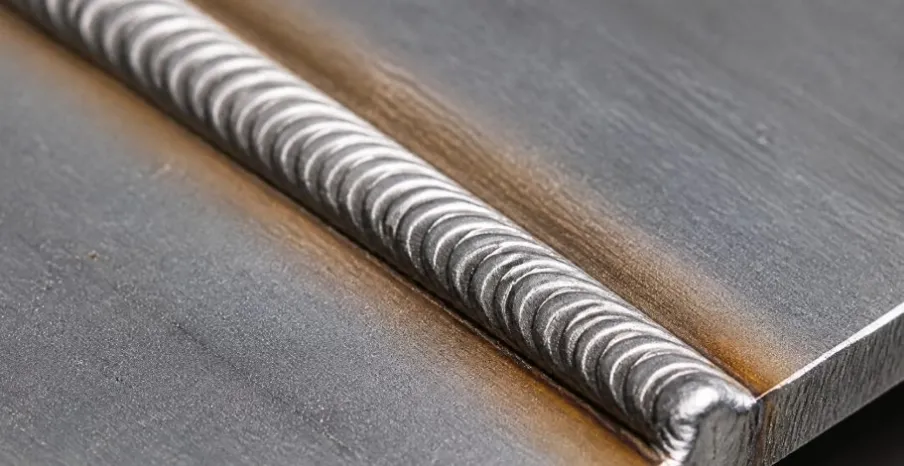
MIG welding is the workhorse for structural seams and longer joints. TIG welding gives fine control on thinner material and visible seams. Laser welding has a small heat-affected zone, so it causes less deformation and leaves a neat weld seam — useful where the seam stays visible or the panel must stay flat.
When laser welding is the right choice
Choose laser welding when deformation is the main risk: large outdoor cabinets such as energy storage enclosures and EV charging cabinets, thin sheet that warps easily under heat, and visible seams where appearance matters. On a battery tray or a charger cabinet, a warped panel means a door that does not close and a seal that does not seal.
When TIG or MIG still makes sense
TIG and MIG still earn their place. MIG suits long structural seams and heavier sections. TIG suits precision joints and thinner material where the welder needs close control. The right question is not which method is "best" in general, but which method fits the material, the thickness and where the seam sits on the finished enclosure.
How to judge a supplier's welding before you order
First, ask how many welding stations a supplier runs and which methods — the numbers are checkable on a factory audit. Second, ask for weld samples and look at deformation and seam neatness, not just the brochure. Third, check the steps around welding: laser cutting of carbon steel up to 12 mm, bending up to 3,000 mm long, and an automatic powder coating line with a daily capacity of 1,500–2,500 sqm. A good weld on a badly cut or badly coated panel still fails. Finally, match the method to the sheet metal material — grade, thickness and finish all change what the weld has to do.
What to send for a quote
Send your drawing (STEP, IGES, DXF, DWG, PDF or 3D CAD) with the material, thickness, quantity and finish. Most sheet metal parts have a MOQ of 1 pc, and quotes are usually given within 3 hours when the specifications are complete.