
Powder Coating and Surface Finishes for Sheet Metal Enclosures: How to Choose
Powder coating, galvanizing, anodizing or brushing? How to match the finish to your enclosure's material and environment — and what to specify in your drawing for an accurate quote.
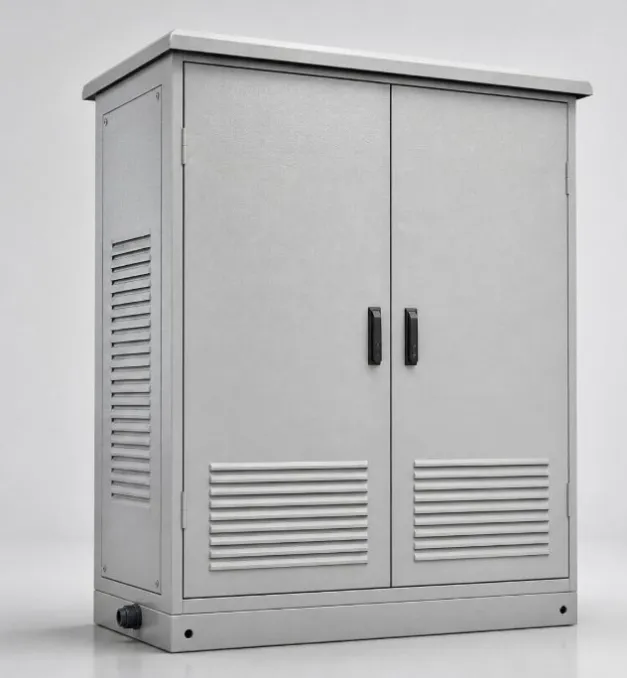
The finish on a sheet metal enclosure is not decoration. For an outdoor EV charging cabinet, an energy storage enclosure or a car wash cabinet, the finish is the first line of defence against rain, humidity and cleaning chemicals. At Qway Hardware, every enclosure built in our Dongguan factory — founded in 2014, 13,000 sqm, 138 people, 10 structural engineers — leaves the line with a finish chosen for its material and its working environment.
Powder coating: our standard finish for outdoor enclosures
Powder coating is the finish we apply most often. Our automatic powder coating line runs at 1,500–2,500 sqm per day, and powder coating is the standard finish on our EV charging cabinets and battery trays. It suits the products that live outdoors: EV charging cabinets, energy storage enclosures and car wash equipment cabinets, where a hard, even coating protects the steel underneath.
Other finishes we offer
One finish does not fit every product, so we keep several surface treatments in house:
- Galvanizing and electrophoresis — available options on our EV charging cabinet.
- Anodizing and passivation — used on battery trays.
- Polishing and mirror polishing — used on EV charging cabinets and car wash cabinets.
- Brushing — done in house on our brushing machine.
- Nickel plating — part of our finishing range. The right choice depends on the base material, the environment the enclosure will work in, and the look you need.
Match the finish to the material
Choosing the right material comes first, because not every finish suits every metal. We build enclosures in SGCC galvanized sheet — the material of our EV charging cabinets and car wash cabinets — stainless steel SUS304/316, aluminium 6061/6063/6082, and carbon steel SPCC/Q235, with the grade confirmed against your drawing. Our guide to sheet metal material explains how grade, thickness and finish change cost, strength and corrosion resistance.
Laser cutting and bending set the practical limits of the design: carbon steel up to 12 mm thick on the laser, and bends up to 3,000 mm long. A finish is applied after forming, so the design, the material and the finish have to be decided together — not as an afterthought.
What to specify when you ask for a quote
To get an accurate quote, send your drawing with the material grade, thickness, finish and quantity. If you have a colour or a specific finish requirement, write it on the drawing. Most sheet metal parts start at MOQ 1 pc, and with complete specifications we usually quote within 3 hours. For a checklist of what to send for a fast quote, see our guide on how to order custom sheet metal parts.
What we do not promise without testing
Salt spray performance depends on the coating system and the film thickness, so we confirm it against the standard and the number of hours you specify — ASTM B117 or ISO 9227 — and can arrange third-party sample testing. IP ratings work the same way: they depend on the enclosure design and need third-party testing. We do not quote salt spray hours or IP ratings from a catalogue; they are confirmed per project, in writing, before you order.